Salotto
- 3.6
- Rating
- 10.00K
- Installs
- Free
- Price

 Analysis by App-foxy
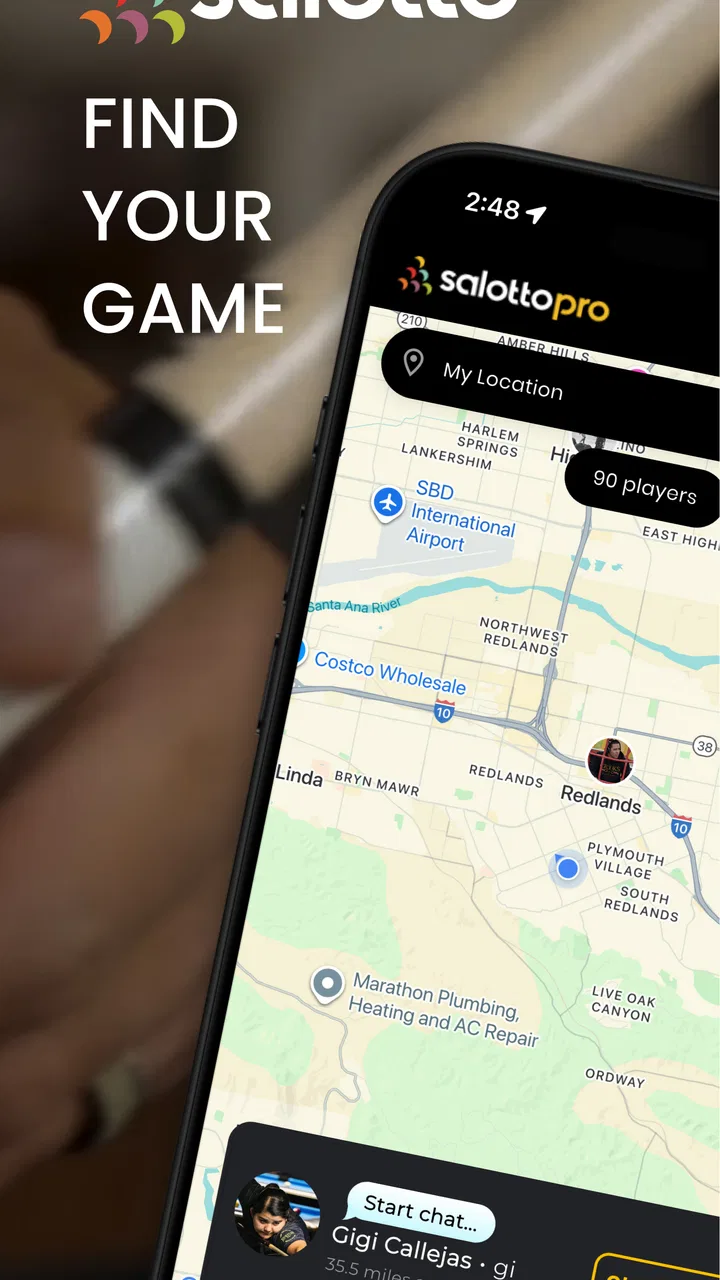
I like sports apps that solve a real problem rather than simply place scores on a screen. Salotto takes a more social route: it is designed for pool players who want to find people nearby, arrange a game, or host one within a shared community. That makes it interesting for anyone whose biggest obstacle is not learning a new shot, but finding a willing opponent at the right time.
My experience with this kind of app is that usefulness depends heavily on the people around you. A community tool can feel immediately practical in an active area and much less valuable when few local players are participating. Salotto therefore deserves to be judged less like a solo training app and more like a meeting point for pool players. The important question is not simply whether it is free to download, but whether it fits the way you already organize games.
What I would consider before choosing it
The first decision is about your goal. If you want drills, shot analysis, rules explanations, or a digital version of pool, this is probably not the app I would start with. Its purpose is social coordination. It is aimed at turning “I feel like playing” into an actual opportunity to play with other people.
You May Also Like

 Blood Strike: 2.5 Anniversary
Blood Strike’s Loadouts Turn Every Drop Into a Tactical Gamble
A close look at Blood Strike’s custom loadouts: how fast access to signature weapons reshapes its battle royale rhythm, rewards preparation, and narrows the gap between fights.

 Pandora - Music & Podcasts
Pandora’s Music Is Easy to Start, but Harder to Recover
Pandora’s strength is its low-effort path from a seed to a station. Its weak spot is how much confidence it asks you to place in connection, setup, and quiet recovery.

 8 Ball Pool
 Is Built on Rivalries, Rematches, and Routine
A close look at the rivalries, rematches, shared routines, and unanswered safety questions that turn a quick pool match into a persistent mobile community.

 Samsung Music
’s Quiet Strength Is Playing What You Already Own
Its reach comes less from spectacle than from dependable access to a personal library. That simplicity is both the app’s strongest retention engine and its ceiling.

 AccuWeather: Weather Radar
AccuWeather Review: A Quick, Clear Forecast for Everyday Decisions
For everyday plans, the best forecast is the one you can understand quickly. AccuWeather makes rain timing, radar, and local conditions easy to act on, with a few trade-offs.

 Hill Climb Racing
Why Hill Climb Racing Still Turns Crashes Into One More Run
A tiny car, a bumpy hill and one more upgrade: Hill Climb Racing keeps resurfacing because its simple chaos makes every near-miss feel personal.
More From Our News Desk
View All News


That distinction matters because the usual alternatives are often informal: asking friends, posting in a local group, calling a pool hall, or relying on whoever happens to be available. Salotto offers a dedicated place for the search instead of making every arrangement through unrelated messaging channels. I find that especially useful for players who have recently moved, are returning to pool after a break, or want opponents outside their immediate circle.
The app sits in the sports category and is made by Salotto LLC. It is free to install, which lowers the risk of trying it, although optional purchases range from less than a dollar to almost fifty dollars per item. I would not treat the free entry point as a promise that every part of the experience costs nothing. Before paying for anything, I would first use the community features long enough to decide whether they genuinely help me arrange games.
Its audience is marked as Teen, so younger users should still use sensible judgment when meeting people they only know through an online community. I would keep first meetings in public venues, tell someone where I was going, and avoid sharing more personal information than needed to arrange the game. Those are ordinary precautions, but they matter more in an app built around meeting players.
The practical test: can it create a real game?
For me, the strongest test is simple: can I open the app when I have free time, identify a realistic opportunity, and agree on the basic details without a long chain of messages? A useful community app should reduce uncertainty around availability, location, and willingness to play. If I still have to contact several people separately and repeat the same questions, its advantage becomes smaller.
I would also consider how flexible I need to be. A player who can visit different venues or play at varied times is more likely to benefit than someone who is available only at one place for a short window each week. Community density and timing are unavoidable trade-offs here. Salotto can connect people, but it cannot manufacture an active local pool scene.
The current version is 3.16.0, and the app supports devices running Android 7.0 or newer. That makes it accessible to people using older Android hardware, though I would still keep expectations realistic about performance on a particularly dated phone. A community app is most useful when notifications, conversations, and updates are easy to check, so an unreliable or slow device could undermine the experience even if the app itself is suitable.
A realistic evening use case
Imagine I finish work unexpectedly early on a weekday and want to play, but my usual partner is busy. With the traditional approach, I might send several messages, wait for replies, and eventually give up or play another day. Salotto gives me a more focused place to look for a player or organize a session. If someone nearby is also interested, the app has done something valuable even before the first break is made.
The same workflow can help a regular host. Instead of treating every game as a private arrangement, I can use the community to make a planned session easier for others to discover. That is a subtle but important difference: the app is not only for people searching for invitations. It can also help someone who already has access to a table make better use of it by bringing players together.
My advice would be to make the request specific. Include the kind of session you want, a reasonable time window, and the general venue or area. Vague posts create unnecessary back-and-forth, while a clear invitation lets other players decide quickly. This is one of the most useful habits with a community app, and it does not require any advanced technical knowledge.
Where Salotto wins over ordinary alternatives
The clearest advantage is focus. General social networks are crowded with unrelated posts, and private messaging works only when I already know whom to contact. Salotto is built around the pool-playing community, so the intent is clearer from the beginning. I am not trying to turn a casual conversation into a game invitation; I am entering a space where that invitation makes sense.
That focus can also make the app more comfortable for newcomers. Someone who does not yet have a local group may feel awkward approaching a busy venue or interrupting established players. A dedicated community gives that person a less intimidating starting point. I would not expect it to replace face-to-face confidence, but it can make the first connection easier.
Another strength is the combination of finding, playing, and hosting. Many informal solutions handle only one part of the process. A chat group may help me ask who is free, but it may not be organized around hosting opportunities. A venue phone call may confirm table availability, but it does not necessarily help me find an opponent. Salotto’s value comes from bringing those social arrangements closer together.
Its real strength is reducing the distance between wanting a game and finding a person to play with. That sounds modest, but it addresses a common problem in recreational sports. Skill, equipment, and enthusiasm are not enough if the other side of the table is missing.
Three ways I would use it beyond casual browsing
- Use it as a backup-player network. I would not wait until the last minute every time. Building a small circle of reliable contacts through repeated games could make future cancellations less disruptive, especially when my usual partner cannot attend.
- Use hosting to test different formats. Rather than asking only for “a game,” I would describe whether I want a relaxed practice session, competitive play, or a chance for several people to meet. Clear framing helps attract the right kind of participant and avoids mismatched expectations.
- Use recurring habits instead of constant checking. I would check around the times I normally play and respond promptly to suitable invitations. Community apps work better when users contribute regular activity instead of opening them only when they are desperate for a game.
The second point is particularly important. A player looking for serious competition may be disappointed by a casual invitation, while someone hoping to practice may not enjoy an intense match. Salotto can help people meet, but the quality of the resulting game still depends on how honestly both sides describe what they want.
What the user base tells me about expectations
The app has passed ten thousand installs, with an average rating of 3.6 from seventy-three ratings and thirty-nine written reviews. I read that as a sign of a useful idea with a mixed real-world experience rather than a universally polished service. The rating is high enough to show that it works for some players, but not so high that I would install it expecting a flawless community everywhere.
Those numbers also reinforce my main caution: local activity matters more than the headline concept. An app can be well designed and still feel empty in a particular city, while a smaller community can be very effective when the right players participate. I would judge it after trying to find actual opportunities in my area, not by assuming that the experience is identical for everyone.
Because the app is free to start, that trial is relatively straightforward. I would explore whether there are nearby players, whether invitations receive useful responses, and whether arranging a game feels easier than using my normal method. If those tests fail repeatedly, paying for optional items would not solve the central problem of limited local participation.
Where another option may fit better
Salotto is not the best choice for every pool player. If I mainly want to improve technique alone, a coaching app, instructional video service, or training plan would be more appropriate. Those tools focus on practice rather than matchmaking. Salotto may help me find someone to play with, but it should not be mistaken for a substitute for structured instruction.
It may also be a weaker fit for players who already belong to a busy club or have a dependable group chat. If my friends answer quickly and our venue handles reservations smoothly, adding another place to coordinate could create more work rather than less. In that situation, Salotto becomes most useful as a way to meet people outside the existing group, not as a replacement for a system that already works.
Players who want a fully private arrangement may prefer direct messaging. A dedicated community naturally involves more visibility and more social interaction than contacting one trusted opponent. Likewise, someone who dislikes negotiating times, venues, and expectations may find the app less convenient than simply booking a table and playing with a known friend.
There is also a difference between discovery and reliability. Finding a possible opponent is not the same as having a confirmed game. I would still verify the time and venue before traveling, particularly when meeting someone new. The app can begin the arrangement, but I would not treat an initial response as a final commitment until the details are clear.
The switching cost is small, but the habit cost is real
Moving from informal coordination to Salotto does not require abandoning existing contacts. I would use it alongside my normal messages at first. That is the sensible approach because it lets me compare results: how quickly I find a game, how much effort the conversation takes, and whether the people I meet are a good match for my playing style.
The main cost is attention. Every additional community needs a little maintenance. I may need to check invitations, answer questions, update plans, and remember which arrangements were made where. If I join without a clear purpose, the app can become another notification source. I would avoid that by using it for a specific goal, such as finding local opponents on one evening each week or hosting an occasional open session.
There is also a social switching cost. A new player may need to introduce themselves, explain their availability, and accept that the first few contacts may not lead to a game. That is normal for community platforms, but it can feel disappointing if I expect instant results. The best way to get value is to contribute useful invitations and respond respectfully, even when a proposed match is not suitable.
On the financial side, the free price makes experimentation easy, but the presence of in-app purchases means I would review each optional purchase carefully. The listed range is from $0.99 to $49.99 per item. I would not spend simply to compensate for an inactive local community. First prove that the basic connection between players works for me; only then consider whether an optional purchase adds enough value.
Questions I would answer before installing
Is it worth trying if I am new to pool? Yes, if your goal is to meet players and gain practical table time, provided you are comfortable communicating clearly and using sensible safety precautions. It is less suitable if you want a guided beginner course or feel unready to arrange games with people you do not know.
Can it replace my pool hall or club? No. I see it as a coordination layer, not a venue. You still need a suitable place to play and agreement about the practical details. Its role is to help people connect around those opportunities.
Should I pay immediately? I would not. Start with the free experience, test local activity, and decide whether the app already improves your routine. Optional purchases make more sense after the community proves useful, not before.
What should I do if there are few responses? Try a clearer invitation, a wider time window, or a nearby area if that is practical. Also give the community time by participating more than once. If repeated attempts still produce nothing, your local network may simply be too small, and a venue, club, or existing social group may be the better route.
Is it appropriate for teenagers? The content rating is Teen, but that does not remove the need for care when arranging in-person meetings. Public venues, clear communication, and informing a trusted person about plans are sensible safeguards for younger and older users alike.
My recommendation for different kinds of players
I recommend Salotto to pool players who see social access as their main obstacle. It is particularly promising for people in a new area, players whose usual partners are unreliable, and hosts who want to make sessions easier for others to discover. The free entry point means I can test that fit without committing money upfront.
I would be more cautious if I lived somewhere with little visible pool activity, already had a dependable group, or wanted technical coaching instead of matchmaking. In those cases, the app may add another step without solving the problem I actually have. A direct club connection, a training resource, or a simple group chat could be more efficient.
My best practical advice is to treat the first week as an experiment. Look for genuinely local opportunities, make one precise invitation, and compare the effort with your usual method. Pay attention not only to whether someone responds, but also to whether the conversation reaches a clear plan and whether the resulting game feels worth repeating. That tells you more than a general rating ever could.
Overall, Salotto is a focused sports app with a sensible purpose and a very specific dependency: it needs an active community to shine. I like the idea of having one place dedicated to finding, playing, and hosting pool games, and I can see it being genuinely helpful when informal contacts fall short. I would install it for discovery rather than instruction, use it alongside my existing contacts at first, and spend only after the local experience proves itself.
For the right player, Salotto is less about replacing the pool hall and more about making sure there is someone to meet at the table. That is a worthwhile problem to solve, even if the app cannot guarantee the same level of activity in every location.
FAQs for Salotto
01What is Salotto and what can I use it for?
Salotto is a social communication app designed for meeting people, joining conversations, and discovering communities around shared interests. After installing it, users can typically create a profile, browse available discussions or rooms, and interact through messages or other social features. The exact experience may depend on the current version, your location, and the communities available on the platform.
02Is Salotto free to download and use?
Salotto can generally be downloaded without an upfront charge, but some features may depend on in-app purchases, subscriptions, or other optional paid services. Before using premium tools, check the pricing information shown in the app store and inside the application. It is also worth reviewing whether recurring billing applies, especially if you activate a trial or subscription.
03Do I need to create an account to use Salotto?
Most of Salotto’s social functions require an account so the app can identify your profile, save preferences, and manage conversations or community participation. Registration may involve an email address, phone number, or a linked account, depending on the version available for your device. Avoid sharing unnecessary personal information and use a strong, unique password.
04Is Salotto safe for chatting and meeting other people?
As with any social or chat application, Salotto should be used with reasonable privacy and safety precautions. Do not share your home address, financial details, passwords, or private documents with people you have just met. Review the app’s privacy controls, block or report suspicious users, and remember that online profiles may not always represent a person accurately.
05Which devices support Salotto, and what should I check before downloading it?
Before downloading Salotto, check whether your Android or iPhone meets the operating-system requirements listed on its official store page. Make sure you have enough free storage, a stable internet connection, and permission to receive notifications if you want timely updates. Availability, supported languages, and certain features can vary by country, device model, and app version.
Pros
- Clean
- modern interface that is easy to navigate
- Useful tools for discovering and joining social conversations
- Supports casual interaction without requiring advanced technical skills
- Notifications help users keep track of relevant activity
- Suitable for meeting people with shared interests
Cons
- Some features may require creating an account or sharing personal details
- The quality of interactions can vary depending on the active community
- Privacy settings may need careful review before using social features
- Notifications could become distracting with frequent activity
- Availability of users and content may differ by region

Salotto
Gallery